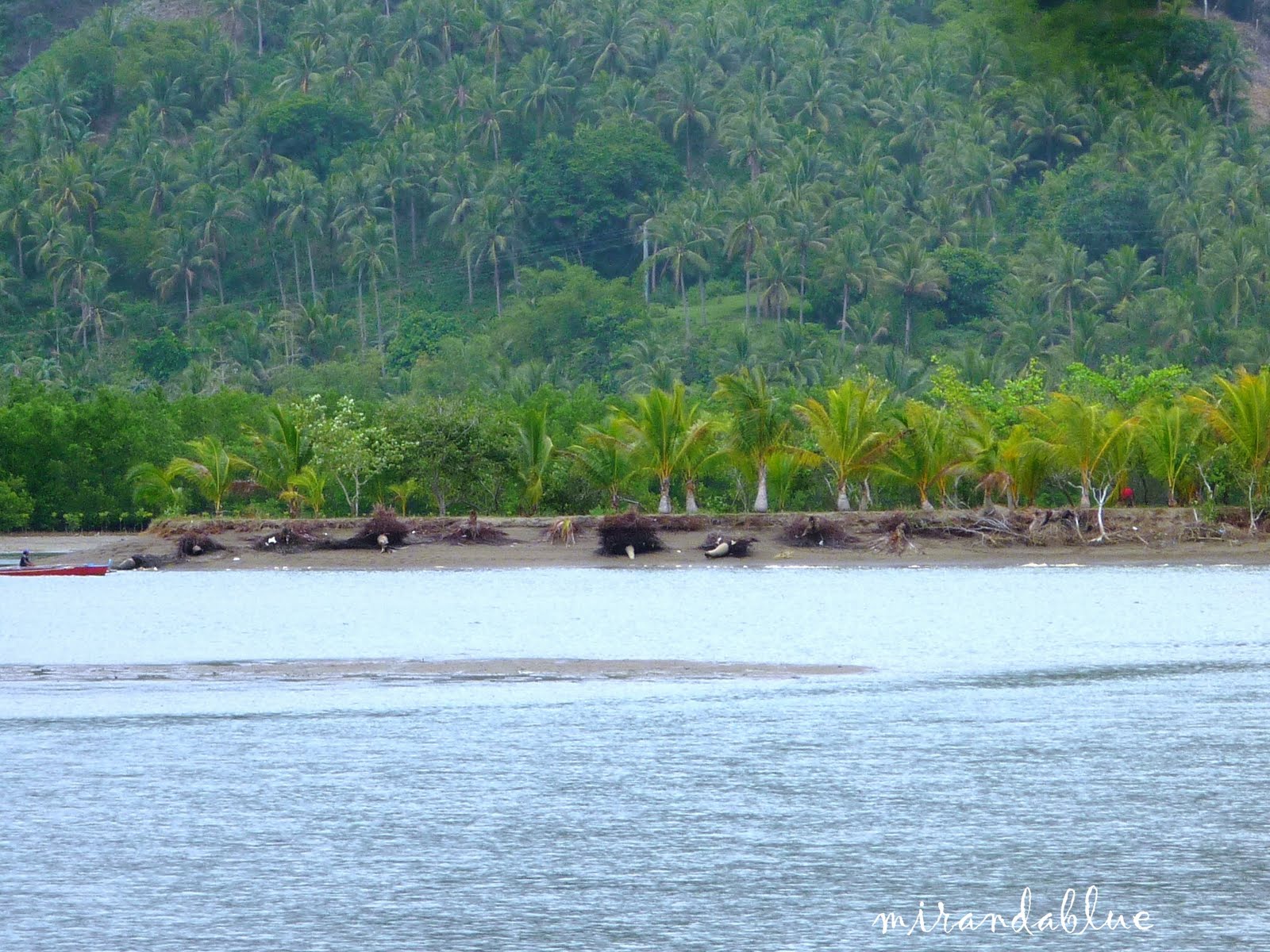
I have a friend who never saw an ebb tide until we went to
Cagbalete Island last year. Then we met a backpacker at the resort who told me how scared he was to see the "waterless" beach, thinking a tsunami was coming. I find it amazing that there are those who lived all their lives in an archipelago like the
Philippines and didn't know about tidal changes.
Most coastal areas experience two high and two low tides per day. One of these high tides is at the point on the earth which is closest to the moon. The other high tide is at the opposite point on the earth. This is because at the point right "under" the Moon (the sub-lunar point), the water is at its closest to the moon, so it experiences stronger gravity and is raised. On the opposite side of the earth (the antipodal point), the water is at its farthest from the moon, so it is pulled less; at this point the earth moves more toward the moon than the water does--causing the water to "rise" as well. In between the sub-lunar and antipodal points, the force on the water is diagonal or transverse to the sub-lunar/antipodal axis (and always towards that axis), resulting in low tide. More
here...
This photo was taken in Sabang, Camarines Sur on 1 April 2010.